Skip to content

Grandparents' love story

Record your grandparents' love story, in their own words

Ask Dadi how she met Dadaji and you get a smile, then a story nobody has written down.

Rukhsana and Iqbal: Two Cups of Chai

For Rukhsana Nani and Iqbal Nana, from their granddaughter Sana, Bengaluru. A fictional family.
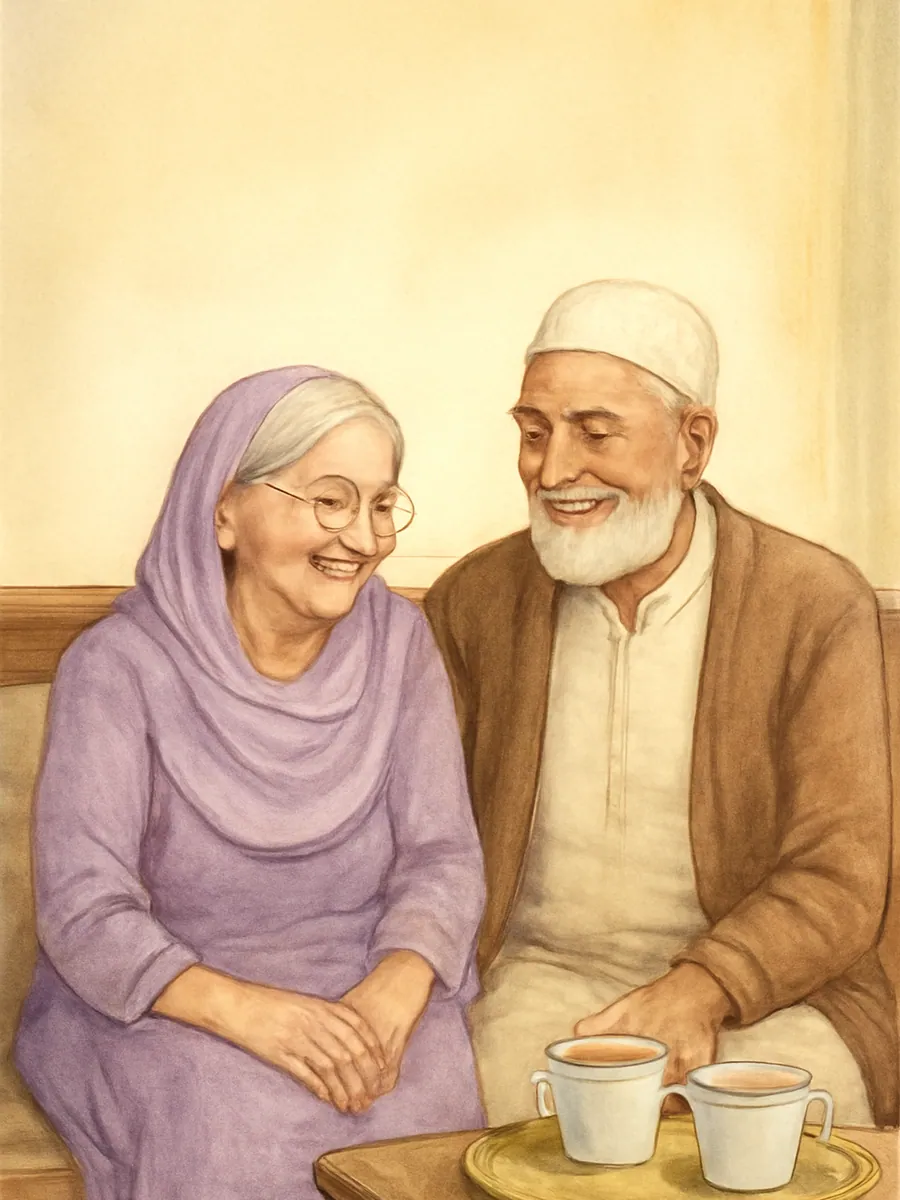
  1. A watercolour of an elderly couple laughing together on a sofa, with two cups of tea on a tray.
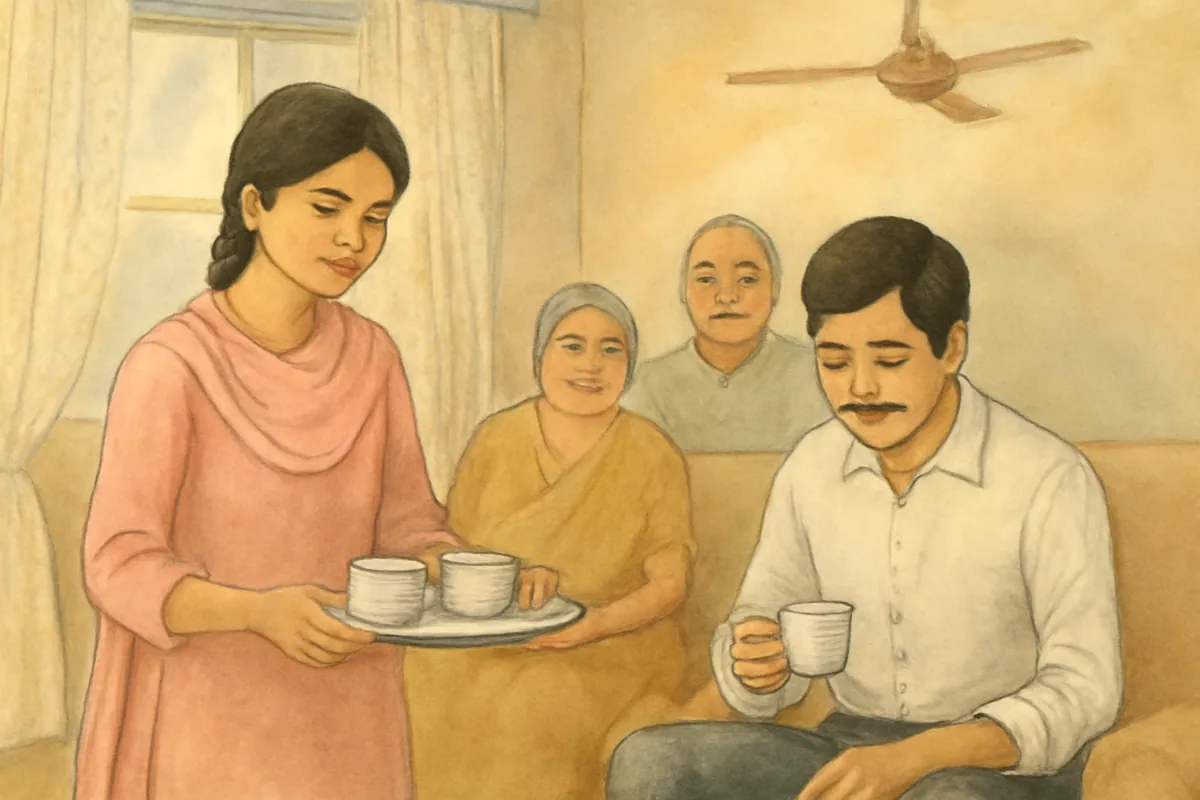
  2. A watercolour of a shy young woman holding a tea tray while a young man looks down at his cup in a 1960s drawing room.
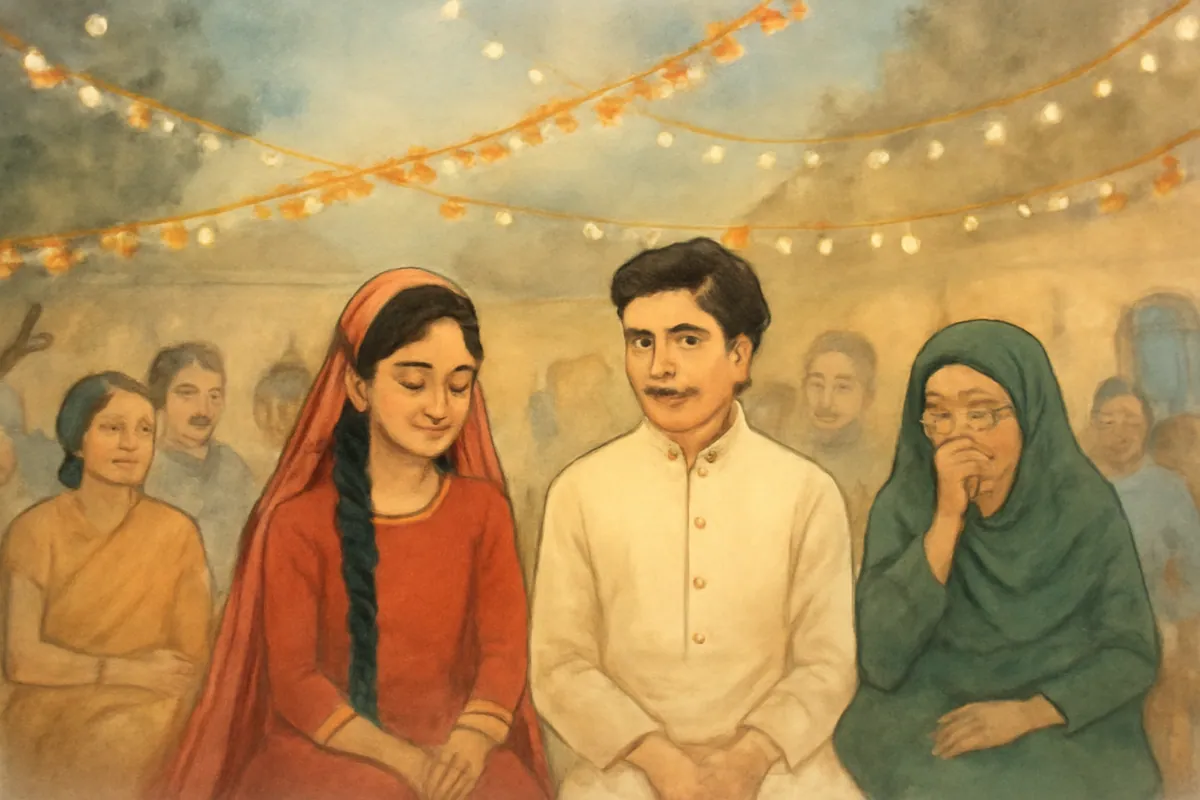
  3. A watercolour of a young bride and groom at a winter evening wedding in a courtyard lit with string lights and flower garlands.
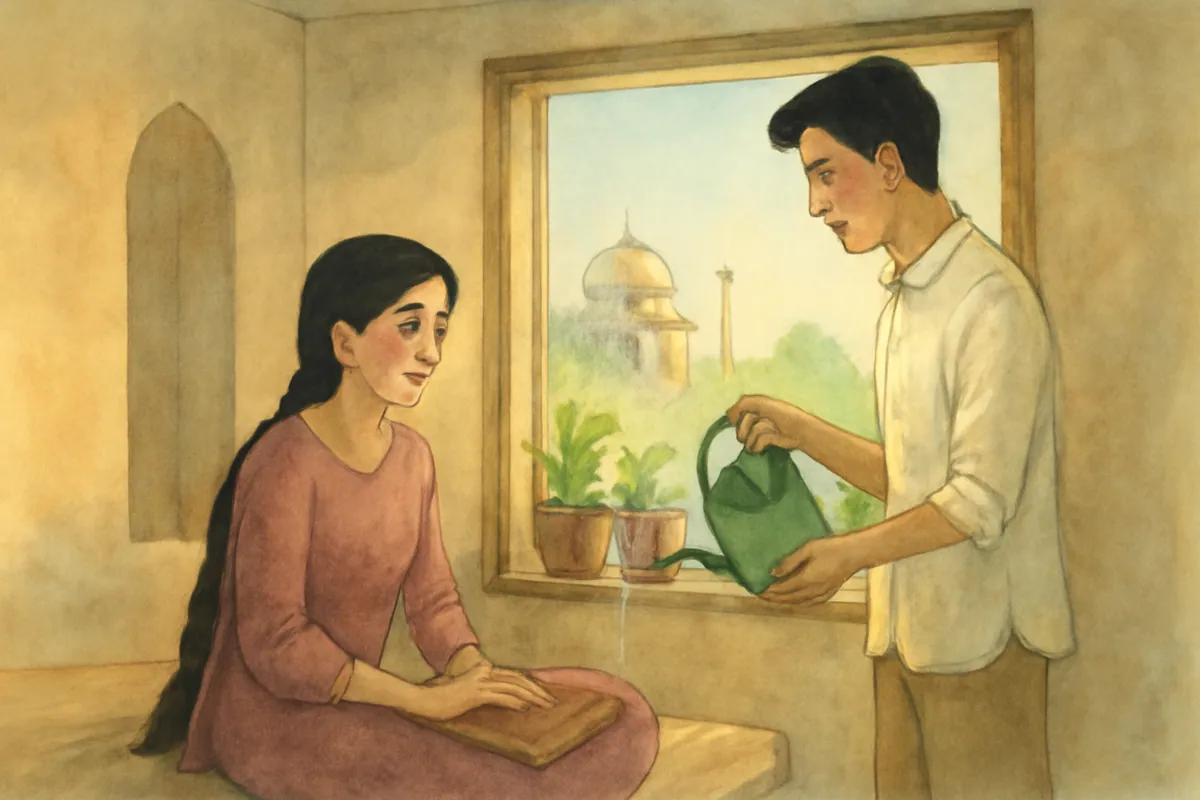
  4. A watercolour of a young couple in a small sunlit room, the woman with a closed ledger and the man watering plants on the window ledge.

Download the sample PDF

What is inside

  1. 1Cover
  2. 2Before they met
  3. 3How the match was made
  4. 4The first meeting
  5. 5The wedding
  6. 6The early years
  7. 7Building a home
  8. 8A message to the family

Print it when you love it

  • Classic hardcover
    ₹1,799
  • Large hardcover
    ₹2,499
  • Heirloom layflat
    ₹4,999
Price notes
  • Launch prices including GST. Final price is confirmed before you pay.
  • Extra pages: ₹99 per 4 pages on 8x8 books, ₹149 per 4 pages on larger books.
  • Second copy of the same book: 30% off. Five or more copies: 35% off.
About this book

Printed copies are paid, for their shelf and for every household in the family.

Page by page
  1. Cover

    Their names with the place and year it began, over a wedding portrait or a recent photo of the two of them. For example Shanta & Prabhakar Joshi: Pune, 1968 and Everything After.

  2. Before they met

  3. How the match was made

    A family visit, a neighbour's suggestion, a letter or a college corridor, told the way they tell it. AI keeps their own phrases and dialect words and never adds events they did not mention.

  4. The first meeting

  5. The wedding

    The wedding day as they remember it, next to the old prints you photograph. Customs vary by family, region and community, so the chapter follows only what they describe. Caste and gotra stay out unless your family chooses to include them.

  6. The early years

  7. Building a home

    The houses, the moves and the children growing up, told as the story of the two of them, with photos sorted by era.

  8. A message to the family

    To close, each of them says what they want the family to remember. Grandchildren appear by first name only.

The questions we ask
  1. Their names, and what the grandchildren call them (tap: Dadi and Dadaji, Nani and Nana, Ammamma and Thatha, Aaji and Ajoba, Ba and Bapuji, or type your own)
  2. (tap: the same language, English, or both side by side)
  3. When and where did they marry? A year and a town is enough
  4. How will they answer?
  5. / Pehli baar ek doosre ko kab dekha?
  6. To them: How was your marriage decided, and what do you remember about the wedding day? / Aapki shaadi kaise tay hui, aur shaadi ke din ki kya yaad hai?
  7. To them: What was the first home you set up together like? / Shaadi ke baad aapka pehla ghar kaisa tha?
  8. To them: What message would you like to leave for the family? / Parivaar ke liye aap kya sandesh dena chahenge?
Best for and styles
  • Grandchildren who have heard how Nana and Nani met only in bits, at family dinners
  • Grandparents who love to talk but would never sit down to write
  • A story told by both of them, so you hear how each one remembers it
  • Families abroad who want their words in their own language with English on the facing page
  • A visit home where you sit between them and record their answers on your phone
  • Classic heirloom: cream pages, serif type and sepia photo plates
  • Bilingual editorial: their language and English on facing pages, in large type for elder readers
  • Folk border: chapter openers inspired by Madhubani, Warli or Kalamkari, chosen by their home region
  • Vintage scrapbook: photo corners, inland letters and old postcard motifs
  • Modern minimal: white space and large portraits of the two of them

Questions parents ask

Is it really free?

Making the book and saving the PDF is free. Printing is optional and paid, and we confirm the price and delivery date by email before you pay.

What happens to my photos?

Photo books are laid out on your device and the photos never leave it. For illustrated books, up to three photos are used once to draw the character and then deleted. See privacy.

Do both grandparents have to agree?

Yes. Before any question, each of them gets a short message in their own language and taps their own yes. You cannot agree on their behalf. Either of them can skip any question or stop at any time, and if one prefers to listen, the other can tell the story.

Their marriage was arranged. Does a love story book still fit?

Yes. The questions ask how the match was made, not what kind of match it was. A story can begin with a family visit, a letter or a photograph. Customs vary by family, region and community, and the book follows only what they say.

You might also like

Ready to make yours?

Free to make. You see every page before you save it.

Make this book